
A practical guide for Early Childhood Educators on puppetry in early years classrooms.
Puppetry has always been part of childhood, but in early years education, it becomes far more than entertainment. A puppet is a bridge. It softens transitions, supports emotional safety, invites curiosity, and gives children a symbolic tool through which they can understand the world.
In high-quality Early Years programs across the world – from Waldorf settings to Reggio-inspired classrooms – puppets are used intentionally to deepen oral language, social-emotional learning, imagination, and early literacy. When used well, puppetry becomes a quiet, powerful pedagogy.
If you’re an early childhood educator wanting to integrate puppetry with purpose, here’s how to begin.
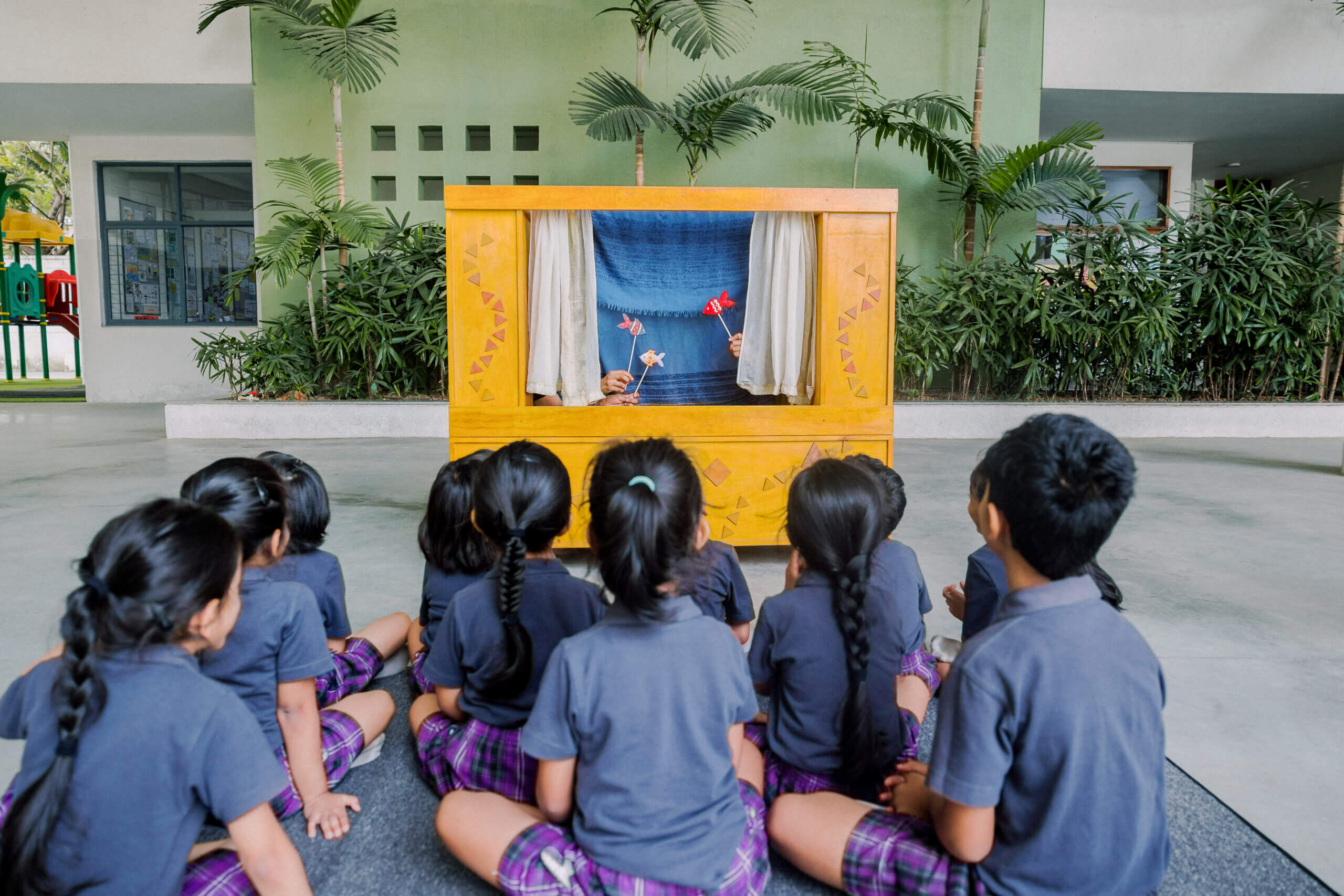
Benefits of Using Puppets in Early Years Classrooms
Young children connect deeply to stories. A puppet becomes a third space – not the teacher, not the child, but a safe, animated presence that makes new experiences feel less threatening and more joyful. Puppetry in early years has many benefits:
Language Development: Children speak more freely to a puppet than to an adult.
SEL: Puppets can model conflict resolution, apology, empathy, and emotional naming.
Imagination: Children suspend disbelief effortlessly, making puppets a perfect storytelling tool.
Behaviour Guidance: A puppet can redirect, model expectations, and de-escalate without triggering shame.
Routine Transitions: Puppets give rhythmic structure – greeting time, clean-up songs, literacy routines.
This is why Early Years teachers worldwide use puppetry as a core instructional strategy, not as an addon.
Types of Puppetry In Early Years Classrooms
| Type of Puppet | Description | Best Use in Early Years Classrooms |
|---|---|---|
| Hand Puppets | Puppets worn over the hand, expressive and easy to animate. | Circle time stories, SEL modelling, introducing concepts, one-on-one conversations. |
| Finger Puppets | Small characters that fit on fingers. | Story sequencing, retelling activities, small group literacy, shy-child participation. |
| Rod Puppets | Puppets attached to thin sticks/rods for controlled movement. | Dramatic play, storytelling corners, expressive movement-based narratives. |
| Sock Puppets | Puppets made from socks; soft, simple, and full of personality. | Low cost whole class puppet creation, behaviour stories, imaginative play. |
| Table / Spoon / Cloth Puppets | Minimalist puppets used with slow, gentle movements (Waldorf-inspired). | Calming stories, rhythmic routines, nap-time transitions, nature-inspired narratives. |
| Shadow Puppets | Paper cut outs projected against a light source. | Science art integrations, wonder based storytelling, festival or theme explorations. |
| Marionettes (String Puppets) | Puppets controlled by strings; more advanced movement. | Special classroom performances, storytelling demonstrations; not ideal for daily routines. |
Materials You Can Use to Make Classroom Puppets
| Material Category | Examples | Why Puppetry in Early Years Works |
|---|---|---|
| Fabric Based Materials | Felt, cotton cloth, wool, yarn, old Tshirts, socks | Soft, gentle textures that support SEL storytelling and create comforting puppet characters. Ideal for hand puppets and sock puppets. |
| Paper Based Materials | Chart paper, brown paper bags, cardstock, newspaper (Paper Mache) | Low cost, accessible and perfect for child-created puppets. Encourages creativity, fine motor skills and story retelling. |
| Recycled or Upcycled Materials | Cardboard rolls, bottle caps, old spoons, buttons, ribbons, cardboard boxes | Promotes sustainability and open ended thinking. Great for making rod puppets, spoon puppets and character props. |
| Natural Materials | Wooden spoons, sticks/twigs, wool roving, seeds, nuts, pebbles | Inspired by Waldorf pedagogy. Supports sensory rich, nature connected learning. Gentle minimalism encourages imaginative storytelling. |
| Mixed Media or Craft Materials | Feathers, beads, pipe cleaners, googly eyes, fabric scraps | Adds texture, personality and fine detail to puppets. Helps children co-create expressive characters. |
How To Use Puppetry In Early Years Classrooms
1. Begin with a Classroom Puppet
Choose one puppet to become the “class companion.” Give it a name, personality, gentle quirks, and a predictable role. It might:
• open circle time
• ask questions
• introduce the day’s provocation
• share feelings the children might also be experiencing
The key is consistency. Children bond with ritual.
2. Use Puppets to Introduce New Concepts
Whether it’s phonological awareness, number stories, or a science exploration, puppets make abstract ideas feel accessible. A puppet might “wonder aloud,” mispronounce words, or ask for help, making children active contributors in the learning process.
3. Bring SEL to Life Through Puppet Stories
If the class struggles with taking turns, a puppet story about turn-taking helps children externalize the issue. Instead of telling children what to do, the puppet experiences the problem and the children help solve it. This builds empathy and agency.
4. Use Puppetry In Early Years for Quiet Classroom Management
Instead of raising your voice, let the puppet signal transitions:
A gentle wave to start clean-up, a soft song for lining up, or a whispered reminder for inside voices. Children respond instantly because the puppet is non-threatening and magical.
5. Invite Children to Become Puppeteers
This shifts learning from teacher-led to child-led.
Children may:
• design paper-bag puppets
• retell stories using finger puppets
• use puppets in pretend play corners
• perform mini skits
This boosts narrative sequencing, vocabulary, and confidence.
6. Integrate Puppetry In Early Years Through Storytelling and Literacy
Let the puppet “forget” the story sequence or mix up characters.
Children will correct it joyfully, rehearsing retelling skills, comprehension, and inferencing without realising it.
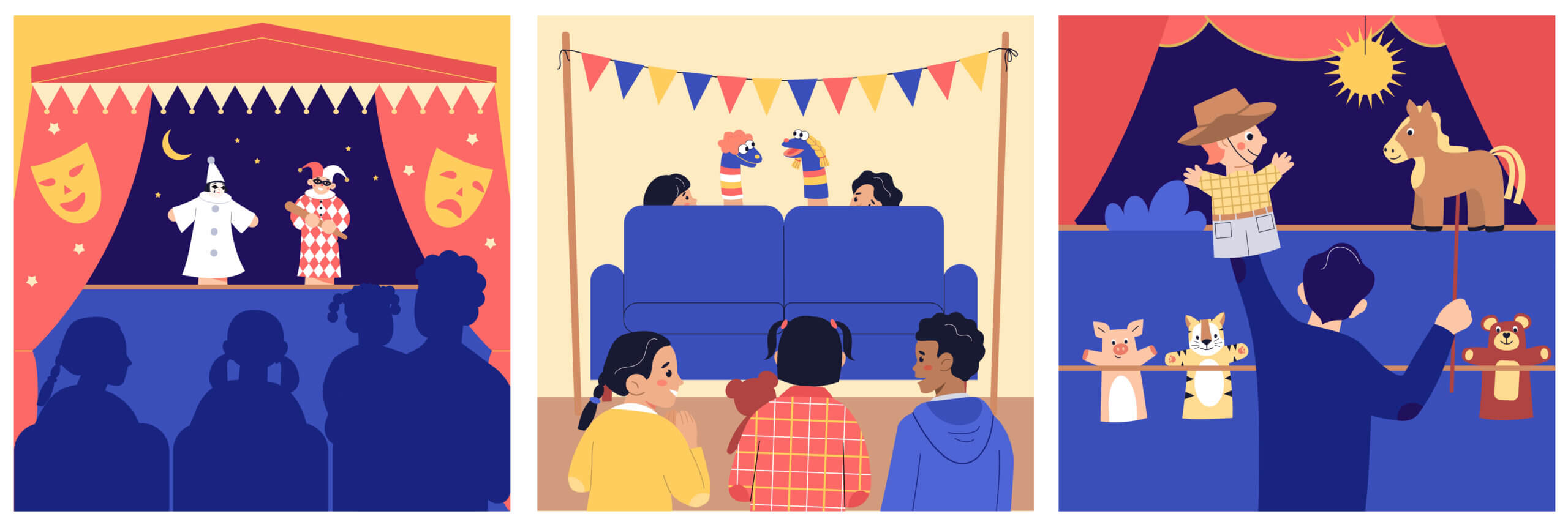
Puppetry In Early Years As A Pedagogical Tool
Many educators use puppets informally but integrating puppetry in early years as a pedagogical tool requires deeper understanding of:
• child development
• symbolic representation
• oral language foundations
• emotional safety
• storytelling structures
• rhythm and routines
• documentation of learning
Inside the PG Diploma in Early Childhood Education, educators learn why puppetry works, how to align it with learning outcomes, and how to design story-based provocations grounded in early childhood theory. It became one of your most successful tools for:
• calming anxious children
• supporting inclusion
• strengthening classroom culture
• building vocabulary and expressive language
• creating predictable rhythms
• shaping pro-social behaviours
How the PG Diploma in Early Childhood Education Deepens Your Skills
If you’re an Early Years educator who wants to understand child behaviour, storytelling, rhythm, imagination, and SEL at a professional depth — puppetry in early years is only one of the many transformative tools explored in the PG Diploma.
Educators who join the program graduate with:
• a portfolio of classroom strategies
• a strong understanding of early years pedagogy
• confidence in designing meaningful learning experiences
• tools to build calm, connected, joyful classrooms
If you’d like to learn how these practices integrate into real early years classrooms, explore the PG Diploma’s curriculum or sign up to receive the prospectus.